How to Make Silky Stovetop Chocolate Pudding from Scratch
A good chocolate pudding should look like something you paid for: dark, glossy, and thick enough that a spoon dragged through it leaves a clean line. Boxed mixes get you there in a pinch, but the stovetop version — cocoa, milk, sugar, cornstarch, a couple of egg yolks, and butter — tastes rounder and less like a chemistry experiment. It takes about fifteen minutes and one saucepan. The only real risk is a two-minute window where lumps form or the bottom catches, and both are easy to avoid once you know what to watch for.
What Makes Stovetop Pudding Silky
Texture here comes down to two things: starch that has been fully cooked, and enough fat to keep everything smooth.
Cornstarch thickens by absorbing liquid and swelling once it gets hot. That swelling needs both heat and time. If you pull the pan off the burner the second the mixture looks thick, the starch is only partly hydrated — the pudding will taste starchy and feel faintly grainy on the tongue. A gentle boil for about a minute finishes the job.
Fat does the rest. Egg yolks and butter coat the starch granules and give the pudding that soft sheen. Butter stirred in at the very end, off the heat so it doesn't fry, is what makes the surface look almost lacquered. Leave it out and you'll still have a decent pudding, just a flatter-looking one.
Ingredients and Ratios That Work
This makes four generous servings, or six small ones.
- 2 cups whole milk — 2% is acceptable; skim gives a thin, watery set
- 1/2 cup granulated sugar
- 1/4 cup unsweetened cocoa powder, Dutch-process for a darker, milder flavor, natural for a sharper one
- 3 tablespoons cornstarch — drop to 2 tablespoons for a softer, sauce-like pudding
- 1/4 teaspoon fine salt
- 2 large egg yolks
- 2 tablespoons unsalted butter, cut into pieces
- 1 teaspoon vanilla extract
- Optional: 2 ounces chopped dark chocolate, or 1/2 teaspoon instant espresso powder
Whole milk matters more than people expect. Pudding is mostly milk, so the fat and protein content sets both the flavor and the body. If you cook with oat milk, expect a sweeter pudding; keep the cornstarch at 3 tablespoons and taste before you add all the sugar.
Step by Step: Cooking the Pudding
- Whisk the sugar, cocoa, cornstarch, and salt together in a heavy-bottomed saucepan. Do this dry, before any liquid goes in. Cocoa powder loves to hide dry pockets, and clumps that form now will survive cooking.
- Pour in about 1/2 cup of the milk and whisk to a smooth, thick paste. This step takes thirty seconds and prevents most lumps before they start.
- Whisk in the remaining milk, then set the pan over medium heat.
- Whisk steadily as the mixture warms. Switch to a heatproof spatula or a flat-bottomed whisk and work the corners and the center of the pan, not just the middle. Scrape the bottom with every pass.
- When the pudding begins to bubble gently, drop the heat to medium-low and let it bubble for about one minute, whisking the whole time. This is the minute that cooks out the raw starch taste.
- Whisk the egg yolks in a small bowl. Ladle in a few spoonfuls of the hot pudding while whisking — this warms the yolks so they don't scramble. Pour the tempered yolks back into the pan.
- Cook for another 1 to 2 minutes over low heat, whisking constantly, until the pudding is thick and one or two slow bubbles break the surface. Don't let it boil hard now that eggs are in.
- Take the pan off the heat. Stir in the butter and vanilla until the butter disappears and the surface turns glossy. Add the optional chocolate here too.
Troubleshooting Lumps, Scorching, and Thin Pudding
Lumps are almost always an order-of-operations problem
Dry ingredients dumped into hot milk will clump, no matter how hard you whisk. Mix them together first, then make a paste with a little cold milk, then thin it out. If lumps appear anyway, pour the pudding through a fine-mesh strainer into a bowl and press them through with a spatula. Nobody at the table will know.
Scorching is a pan-and-heat problem
Use a heavy-bottomed saucepan — stainless with a thick base, enameled cast iron, or a good nonstick. Thin aluminum heats in hot spots and burns milk in seconds. Keep the heat at medium at most, and never walk away during the first five minutes. If you smell toasted milk, pull the pan off immediately and pour the pudding into a clean bowl without scraping the bottom.
Thin pudding is undercooked pudding
Starch-thickened pudding firms considerably as it cools, so it should look slightly looser in the pan than you want on the plate. But if it's thin after three hours in the fridge, it never reached a real boil. Next time, let it bubble a full minute before the eggs go in.
The Spoon Test
Dip a wooden spoon into the pudding and lift it out. Run your finger across the back of the spoon, straight through the coating. If the line holds clean edges and the pudding doesn't run back into it, you're done. If the coating drips off in a steady stream, keep cooking and check again in thirty seconds.
Hot pudding should coat the spoon and hold a line; cold pudding should hold its shape on the spoon. Aim for somewhere between the two.
Cooling, Serving, and Storing
Pour the pudding into small bowls or one wide dish. Press a piece of plastic wrap directly onto the surface — trapped steam is what forms that rubbery skin — and refrigerate for at least two hours, or up to three days.
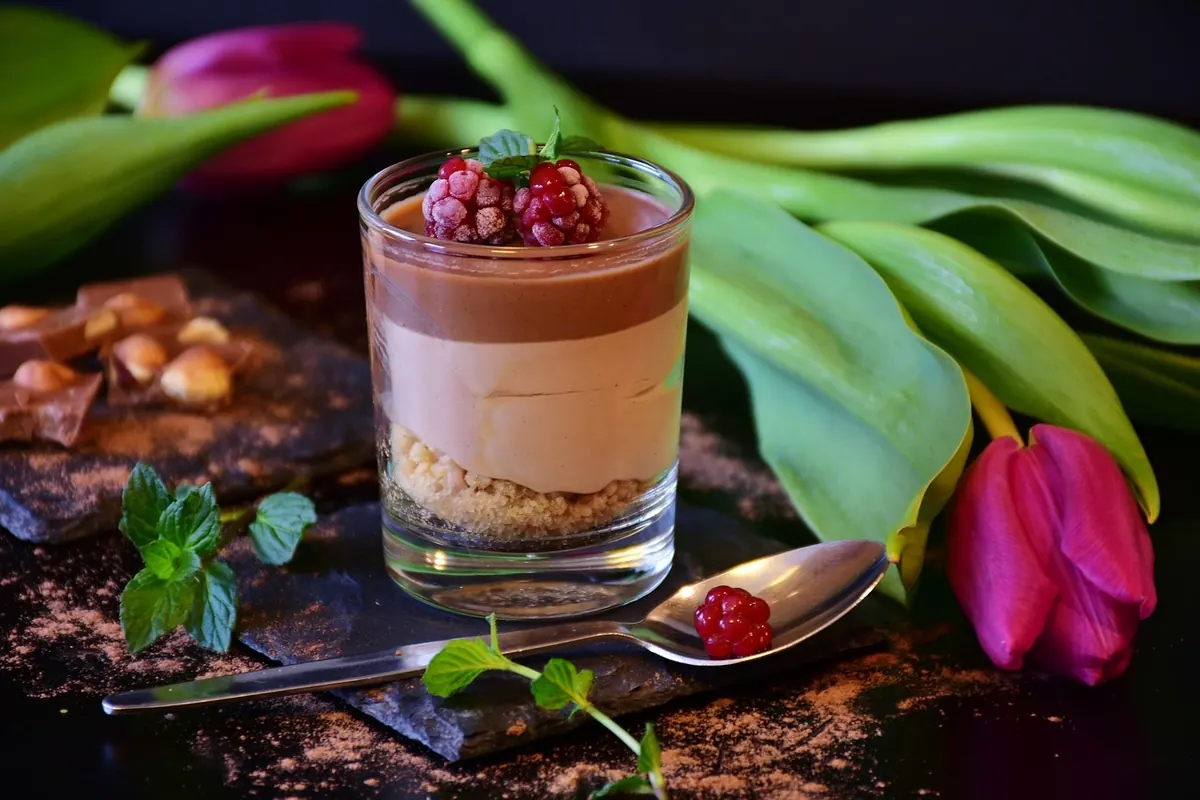
Serve it cold with lightly sweetened whipped cream, a pinch of flaky salt, toasted almonds, or sliced banana. A spoonful of peanut butter swirled into each portion while the pudding is still warm is a very good idea. For something layered, alternate pudding with crushed graham crackers and cream in a glass.
To reheat, warm gently in a saucepan over low heat with a splash of milk, stirring the whole time. The microwave works too, in ten-second bursts. Pudding that has been reheated won't be quite as glossy, so enjoy most of it cold.
Practice, Then Improvise
Make this once as written. The second time, you'll know how your pan behaves and how long your stove takes to bring milk to a bubble, and the whole thing becomes nearly automatic. From there you can swap in espresso powder, steep orange zest in the milk before cooking, or drop the cornstarch to 2 tablespoons and use the pudding as a warm sauce over cake. The technique — hydrate the starch, temper the eggs, finish with butter — stays the same.
Photo: RitaE / Pixabay
You Might Also Like
Doubling a custard recipe takes more than multiplication. Learn which ratios to scale, how pan depth drives bake time, and how to chill safely for a crowd.
How oat, soy, almond, and coconut milks behave in dairy-free pudding, plus the starches, agar, and gums that deliver either a soft spoonable set or a firm sliceable one.