Pudding Basics: A Beginner's Guide to Tempering Eggs and Cooking Custard
Two eggs, a cup of milk, a spoonful of sugar. Custard pudding sounds like the easiest dessert in the book, right up until the mixture hits the heat and turns into sweet scrambled eggs. It happens to nearly everyone the first time, and it is almost never the recipe's fault. Custard lives in a narrow window between liquid and curdle, and the cook's job is to walk through that window slowly. Two habits get you across: tempering the eggs before they meet real heat, and cooking gently enough that you can stop at exactly the right moment.
What Is Actually Happening in the Pan
Egg yolks are mostly water with proteins suspended in it. Cold, those proteins sit coiled and separate. As they warm, they unwind and start linking up, forming a loose web that traps water and thickens the mixture. Keep heating and the web tightens, squeezing that water back out. That is curdling: the proteins have gone from a soft net to a tight knot, and the liquid they were holding pools separately.
For custard, the useful zone is roughly 160°F to 180°F. Below it, you have flavored milk. Above it, you have a mess. Most of custard-making is learning to work inside that band without panicking, because the change from thick to broken can happen in under a minute.
Tempering, Explained Without the Fuss
Tempering means warming the eggs gradually, by adding hot liquid to them in small doses while whisking, instead of dumping cold eggs into hot milk. Think of stepping into a hot bath an inch at a time rather than being shoved in. Each small addition of dairy raises the egg mixture a few degrees. By the time you have added a third of the liquid, the bowl feels warm to the touch and the yolks no longer shock when they meet the rest of the pan. Done well, nobody can taste the technique. It just looks like custard.
Tempering, Step by Step
- Whisk the yolks with the sugar first. A full minute of whisking dissolves the sugar and lightens the mixture, which gives the proteins a little breathing room before heat arrives.
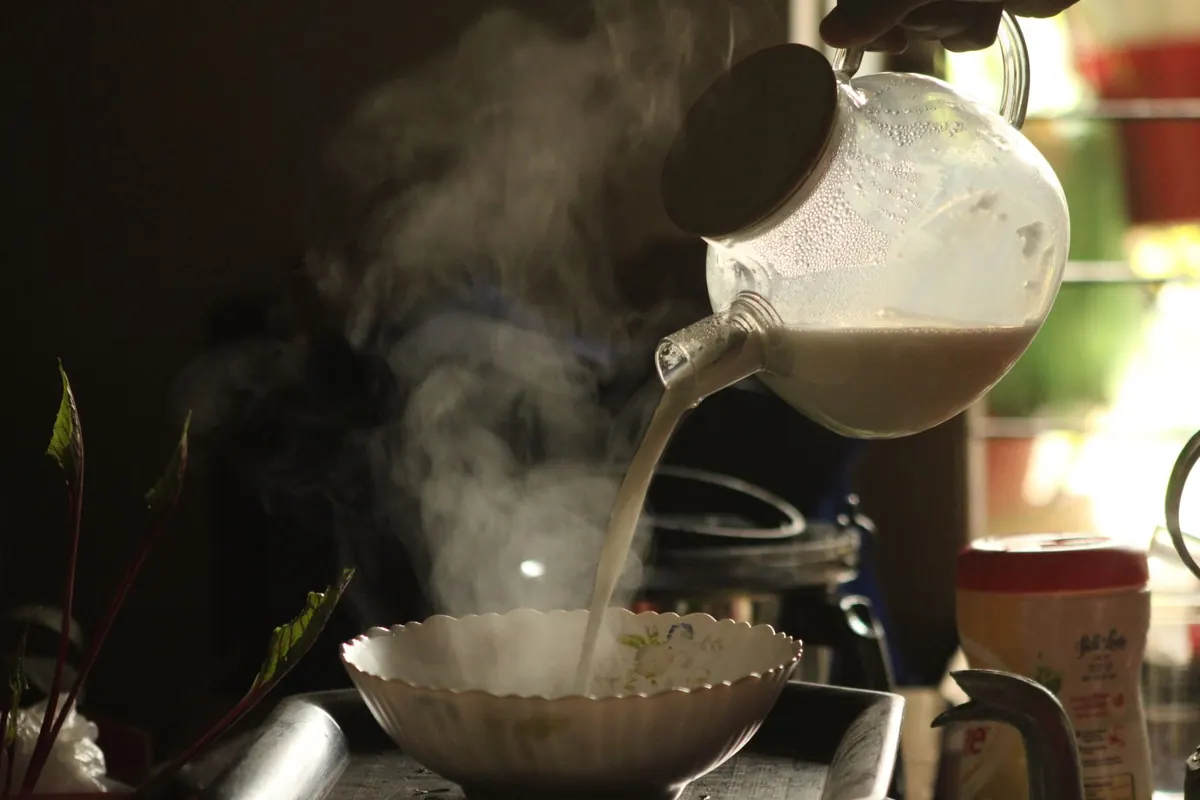
- Warm the dairy gently. You want steam rising and small bubbles ringing the edge of the pan. Do not boil it; boiling dairy poured onto yolks is the fastest route to lumps.
- Add one spoonful. Ladle a tablespoon or two of the hot dairy into the yolks, whisking constantly. The mixture will look thin. That is normal.
- Add another, then a slow stream. Keep the whisk moving and pour steadily. Once about a third of the liquid is in, the bowl should feel warm.
- Return everything to the saucepan. Pour the tempered yolks back into the remaining dairy, scraping the bowl so nothing is wasted.
- Switch to low heat and stir without stopping. From here on, motion is what protects you.
Gentle Heat Is Not a Suggestion
Medium heat feels efficient. It isn't. Once the eggs are in the pan, custard needs low heat and constant stirring. A heavy-bottomed saucepan spreads heat more evenly than a thin one, and a double boiler or a heatproof bowl set over simmering water buys you an even wider margin for error.
Stir with a silicone spatula rather than a whisk. The flat edge sweeps the bottom and corners where custard likes to catch, and it lets you feel the moment the mixture starts to thicken. Scrape the corners every few passes. If the pan gets hot enough that you would hesitate to touch the side, lift it off the burner for ten seconds and keep stirring. Custard forgives that kind of interruption; it does not forgive a burner left on high.
Doneness Cues You Can Actually Trust
Timers are unreliable here, because pans, burners, and starting temperatures all differ. Watch the custard instead.
- It coats the spoon. Dip a wooden spoon in, lift it out, and draw a finger across the back. If the edges of the stripe hold instead of running back together, you are there.
- It reads 170°F to 180°F. An instant-read thermometer takes the guesswork out entirely. Check the center, not the mixture pressed against the hot pan wall.
- It thickens visibly. The custard goes from watery to faintly syrupy, and the first wisps of steam appear.
- The bubbles stay at the edge. A few small bubbles around the rim are fine. Bubbles breaking across the whole surface mean you have gone too far.
When in doubt, pull it early. Custard thickens considerably as it cools, and a mixture that looks loose off the heat often sets beautifully after an hour in the refrigerator.
If It Starts to Scramble
Granular bits, a grainy feel along the bottom of the pan, a faint whiff of cooked egg: act immediately. Pull the pan off the heat and keep stirring, because residual warmth sometimes finishes the job on its own. Then pour the custard through a fine-mesh sieve into a clean bowl. Small curds and stray bits of cooked egg catch in the mesh, and the liquid that passes through is frequently a perfectly good custard base.
If the mixture has separated into curds and liquid, strain it anyway, then whisk the smooth portion. Most of the time it still sets. A badly broken custard cannot truly be unbroken, but it can be blended smooth and strained, which is close enough for a pudding you are serving at home rather than selling.
Cooling, Straining, and Chilling
Strain the custard once even if nothing went wrong. It costs ten seconds and removes any tiny bit of cooked egg you did not notice. Then press a piece of plastic wrap directly onto the surface to keep a skin from forming, or lay a buttered sheet of parchment there instead. Set the bowl in an ice bath and stir occasionally until it is cool, then refrigerate for several hours.
Custard firms noticeably as it chills, so judge the texture tomorrow rather than now. If you are baking the custard into a pudding, the same cues apply before it goes into the oven; the oven only finishes the job.
Your First Batch, Start to Finish
A workable starting point: two cups of whole milk or half-and-half, four egg yolks, a third of a cup of sugar, a pinch of salt, and a teaspoon of vanilla stirred in off the heat. Warm the dairy, temper it into the yolks, return everything to the pan, and stir over low heat until the custard coats a spoon. Strain, chill, and taste.
If it came out a little loose, cook it ten seconds longer next time. If it is grainy, your heat was too high. Custard rewards repetition far more than talent, and by the third batch you will feel the change under the spatula before any thermometer tells you.
Photo: WOKANDAPIX / Pixabay
You Might Also Like
Doubling a custard recipe takes more than multiplication. Learn which ratios to scale, how pan depth drives bake time, and how to chill safely for a crowd.
How oat, soy, almond, and coconut milks behave in dairy-free pudding, plus the starches, agar, and gums that deliver either a soft spoonable set or a firm sliceable one.